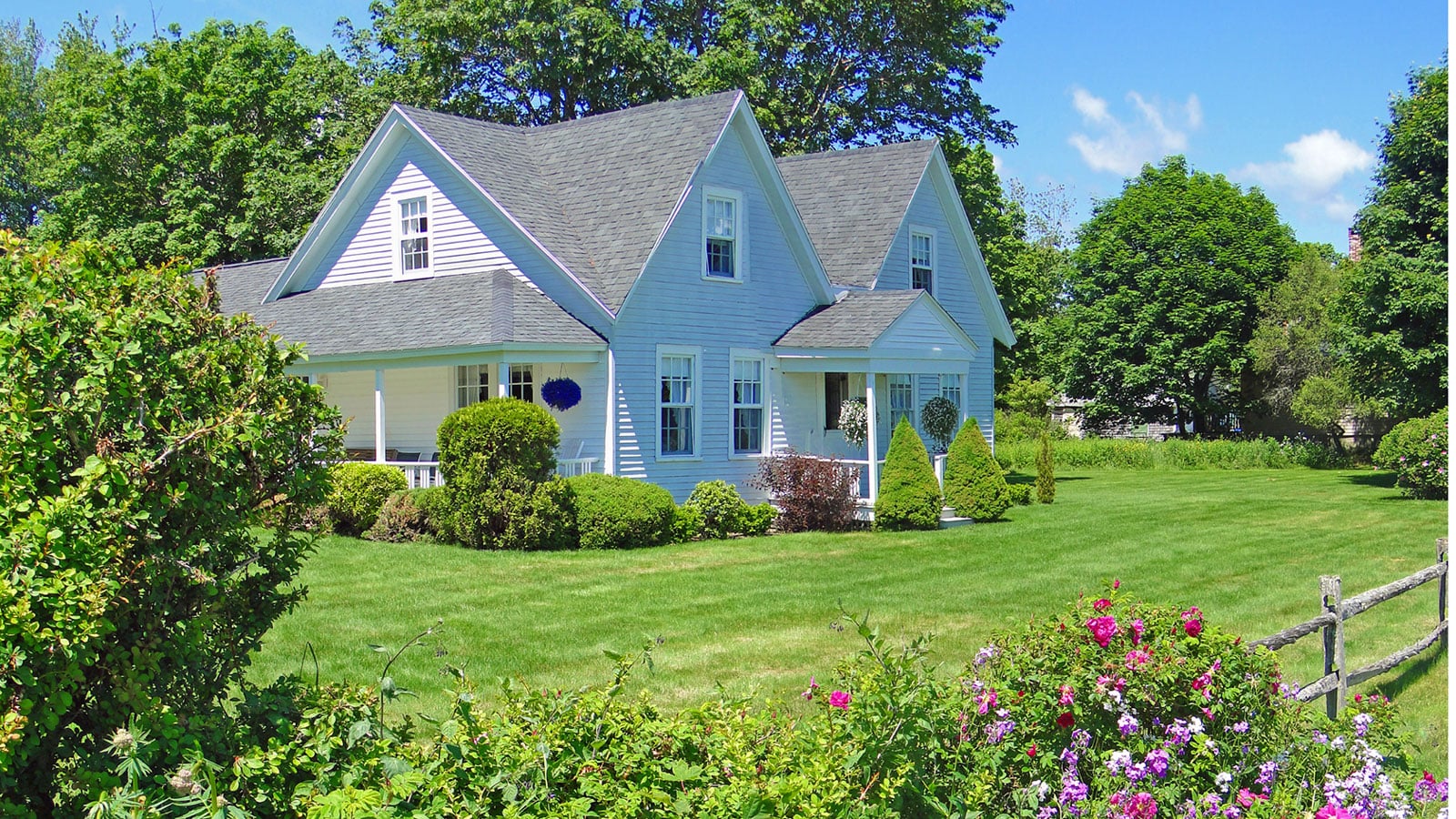
A lot of buyers in Maine hear “USDA loan” and picture a farmhouse ten miles past the nearest gas station. That assumption keeps otherwise qualified buyers from ever running the numbers.
Here’s the reality: USDA’s rural eligibility map covers almost the entire state of Maine. The program also just picked up an update for 2026. Some of it works in a buyer’s favor. Some of it didn’t change at all, and that matters too. Here’s what’s actually different this year, what’s held steady, and how USDA stacks up against CUSO’s own CU Promise loan when you’re weighing down payment and credit flexibility.
What a USDA Loan Actually Is
A USDA loan is a mortgage backed by the U.S. Department of Agriculture’s Rural Development program (officially the Single-Family Housing Guaranteed Loan Program). The government guarantees a portion of the loan, which lets lenders offer terms that would otherwise be hard to justify, like no down payment at all. The USDA’s own program page describes it as “100% financing for buyers who qualify”.
Two things determine whether you qualify, and neither one has to do with your job title or your credit card debt. The first is the property’s location. It has to sit in a USDA-designated rural area. The second is household income, which has to fall under a limit set for your county and household size. If you get both right, there’s no down payment standing between you and closing day.
How Much of Maine Actually Qualifies
USDA’s “rural” designation isn’t about population density the way most people think. It’s a population threshold, generally under 35,000 residents, and Maine doesn’t really have many places that clear that bar.
The areas that fall outside the map are concentrated around the state’s biggest population centers: Portland, the Lewiston-Auburn area, and Bangor. Plenty of towns most people would call “suburbs,” still qualify. That means a large share of Maine’s geography, arguably most of it outside of those urban cores, is fair game for a USDA loan. The only way to know for certain about a specific address is to check it against USDA’s Eligibility Website, since boundaries can sometimes run down the middle of a street.
What Changed for 2026
USDA updates its guidelines every fiscal year, and 2026 brought one real change worth knowing about: income limits went up. As of July 2026, the standard limit sits at $122,800 for a 1-4 person household and $162,100 for a 5-8 person household in most Maine counties, up from last year. That’s a meaningful shift for buyers who were previously just a few thousand dollars over the line. High-cost counties can have different limits, so the eligibility tool is still the source of truth for your specific situation.
What didn’t change is just as useful to know. The guarantee fees, an upfront fee of 1.00% of the loan amount and an annual fee of 0.35% of the remaining balance, stayed exactly where they were. Those fees fund the program, and USDA confirmed both rates carried over into fiscal year 2026 without adjustment. The rural eligibility map itself also held steady this year. The last real redrawing of the lines happened back in 2023 following the 2020 Census but nothing has shifted since.
In plain terms: it got a little easier to qualify on income, and the cost structure and the map stayed put. For a buyer who ran the numbers a year ago and came up just short, it’s worth a second look.
USDA vs. CU Promise: Comparing Down Payment and Credit Flexibility
USDA isn’t the only low-down-payment option on the table, and we’re putting it side by side with our own CU Promise loan.
USDA’s down payment requirement is zero. There’s also no fixed minimum credit score set by USDA itself, though lenders commonly look for a score in the neighborhood of 640 to run the file through automated underwriting. Buyers below that line aren’t automatically out, and the file typically needs more documentation to make the case.
CU Promise works differently because it isn’t tied to geography or income limits at all. The CU Promise 97 option asks for 3% down and favors buyers with strong credit. The CU Promise 90 option asks for 10% down but opens the door to a wider range of credit profiles, and it comes without mandated Private Mortgage Insurance (PMI).
So the real decision comes down to which tradeoff fits your situation. A buyer in an eligible rural area with tighter cash on hand and income under the local limit often comes out ahead with USDA’s zero-down structure. A buyer in Portland or Lewiston-Auburn, where USDA isn’t an option regardless of income, or a buyer whose income runs over the USDA limit, has a real alternative in CU Promise that doesn’t ask them to move outside city limits to qualify.
CUSO’s Take: Run Both Numbers Before You Decide
Programs like this only widen the path to homeownership if buyers actually know they qualify. CUSO has spent more than 30 years helping Maine and New Hampshire buyers work through exactly this kind of comparison; a USDA loan and a CU Promise loan can produce very different monthly payments and closing costs for the same purchase price, and the only way to know which wins for your situation is to run both.
Frequently Asked Questions
Do I have to live in the middle of nowhere to qualify for a USDA loan in Maine? No. USDA’s rural designation is based on a population threshold, not remoteness, and it excludes only the state’s more urban cores like Portland, Lewiston-Auburn, and Bangor. Plenty of towns most people would consider ordinary suburbs still qualify. Check your specific address on USDA’s Eligibility Website rather than guessing based on the town name.
Is a USDA loan the same thing as a MaineHousing loan? No, they’re separate programs with separate rules. MaineHousing is a state agency program with its own income and purchase-price limits; USDA is a federal program tied to rural geography and household income. Some buyers qualify for both and should compare terms, but they’re not interchangeable.
If there’s no down payment, is there some kind of catch, like higher PMI? USDA loans don’t carry traditional monthly PMI. Instead, the cost shows up as the guarantee fee structure: a 1.00% upfront fee (which can typically be rolled into the loan) and a 0.35% annual fee built into the payment. It’s a different mechanism than PMI, but it’s the tradeoff for zero down.
Can I still get a USDA loan if my credit isn’t perfect? USDA itself doesn’t set a hard minimum credit score. Most lenders look for something in the 640 range to process the loan through automated underwriting, but a lower score doesn’t automatically disqualify you. It usually just means a closer look at the full file. Talking to a loan officer early is the fastest way to find out where you stand.
How do I actually find out if my income and the property both qualify? Property eligibility and income limits are both checked through USDA’s Eligibility Website, and the tool is address-specific and updated for the current household income limits. A CUSO loan officer can walk through both numbers with you in one conversation rather than leaving you to piece it together from two different tools.
A USDA loan and a CU Promise loan can lead to very different numbers for the same house. The only way to know which one fits is to look at both side by side. Connect with one of CUSO’s local loan officers to see where you stand on either path.
Related reading: Maine First-Time Home Buyer Programs: 2025 Guide | Low Down Payment Mortgage Options Explained | Mortgage Glossary | First-Time Homebuyer Resources | Apply Now